Thermal power plants in Chile add up to 11,204 MW of operating capacity in the National Electricity System (SEN), 28.6% of the total, according to National Energy Commission (CNE) data as of July 2026 compiled in the Generadoras de Chile September bulletin. They split almost into thirds: 3,888 MW of natural gas, 3,867 MW of coal and 3,450 MW of oil products such as diesel and fuel oil. In one year, thermal capacity fell 4.9%, while renewable capacity rose 8.6%.
Thermal plants generate by burning a fuel to produce steam or drive a turbine. In Chile they remain key to keeping the system secure at night, in dry years and when transmission fails, but their role is shrinking: the decarbonisation plan aims to retire or convert every coal plant before 2040. This guide covers how many thermal plants there are, where they are, how much they generate and the coal exit schedule.
View the data as a table
| Thermal capacity in the grid | 11,204 MW |
| Natural gas | 3,888 MW |
| Coal | 3,867 MW |
| Oil products | 3,450 MW |
How much capacity Chile's thermal power plants add up to
The SEN had 39,231 MW in operation in July 2026, excluding plants in testing. Solar PV is the technology with the most capacity (13,041 MW), followed by wind (6,423 MW). The three thermal technologies come after run-of-river hydro and together equal almost 29% of the system. With October data, the CNE reports 38,726 MW of net capacity nationwide, of which 29% is thermal, according to its monthly report.
| Technology | Capacity (MW) | % of SEN | Change in one year |
|---|---|---|---|
| Natural gas | 3,888 | 9.9% | −11.2% |
| Coal | 3,867 | 9.9% | 0.0% |
| Oil products | 3,450 | 8.8% | −2.6% |
| Total thermal | 11,204 | 28.6% | −4.9% |
| Total renewable | 28,027 | 71.4% | +8.6% |
| Total SEN | 39,231 | 100% | +4.3% |
Source: Generadoras de Chile, September 2026 bulletin, with CNE operating capacity data as of July 2026. Changes versus July 2025.
The bulletin does not detail which plants explain the drop in gas capacity; coal capacity was unchanged over the year. There are almost no new thermal plants under construction: of the 4,676 MW declared under construction as of 30 September 2026, only 257 MW are diesel plants (six projects) and 3 MW LNG; the rest is solar, wind and hydro, according to the CNE.
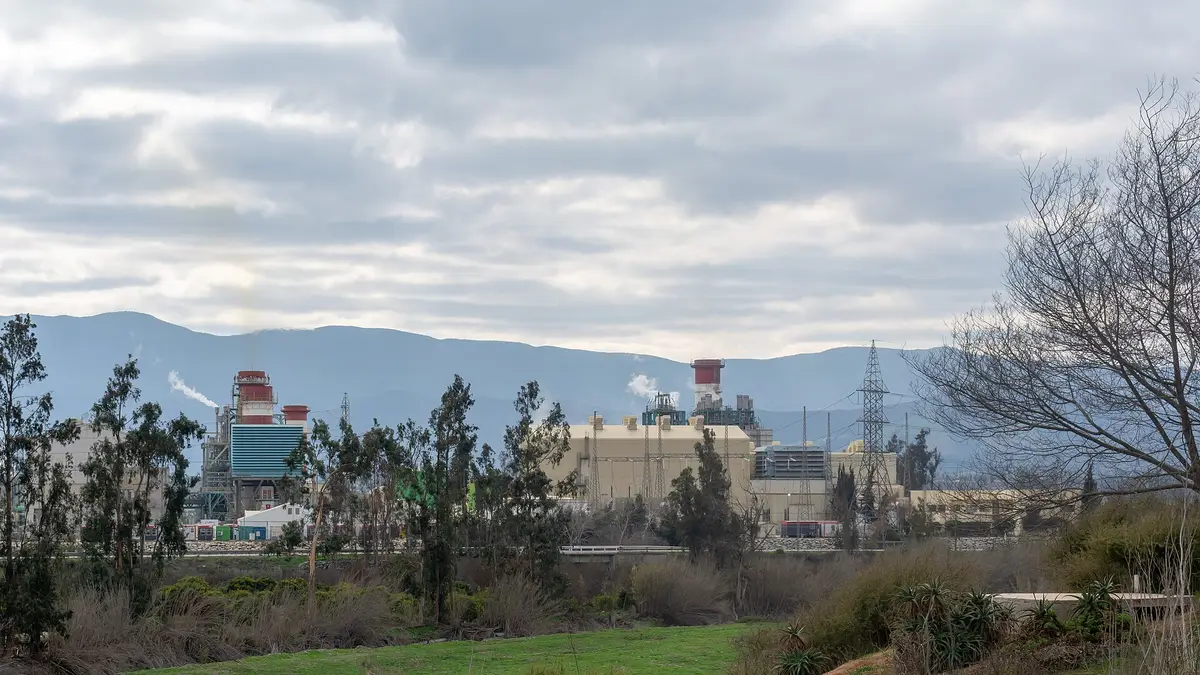
The diesel plants under construction are generally backup units designed to run a few hours a year, at times of tight supply or when a line fails. Their capacity works as insurance for the system, a role increasingly played by batteries: the CNE records 76 storage projects under construction totalling 4,932 MW. The most efficient thermal plants in the country are gas combined cycles, which use the heat of a turbine's exhaust gases to drive a second steam turbine, located mainly in Quillota, Mejillones and Santiago.
Where Chile's thermal plants are
Thermal plants are concentrated on the coast, near the ports that receive coal and liquefied natural gas. Valparaíso is the region where they weigh most: 75% of its 3,547 MW is thermal, because of the Quintero and Puchuncaví complexes and the gas plants in Quillota. It is followed by Los Ríos (36%), Antofagasta (33% of 11,262 MW), with the Mejillones and Tocopilla hubs, and Coquimbo (32%). In Atacama, the Guacolda complex in Huasco explains much of the 26% thermal share.
View the data as a table
| Valparaíso | 75% · 3,547 MW in total in the region |
| Los Ríos | 36% · 360 MW in total in the region |
| Antofagasta | 33% · 11,262 MW in total in the region |
| Coquimbo | 32% · 2,131 MW in total in the region |
| Atacama | 26% · 5,620 MW in total in the region |
| Los Lagos | 26% · 965 MW in total in the region |
| Biobío | 23% · 5,418 MW in total in the region |
| Metropolitana | 19% · 2,448 MW in total in the region |
| O'Higgins | 12% · 2,176 MW in total in the region |
| Tarapacá | 7% · 683 MW in total in the region |
| Maule | 7% · 2,907 MW in total in the region |
| Arica y Parinacota | 6% · 168 MW in total in the region |
| Ñuble | 5% · 421 MW in total in the region |
| La Araucanía | 2% · 1,126 MW in total in the region |
At the other end, in La Araucanía (2%), Ñuble (5%), Arica y Parinacota (6%), Tarapacá and Maule (7%) almost all capacity is renewable. Aysén and Magallanes have their own medium-sized systems, which are not part of the SEN.
How many coal plants are left in Chile
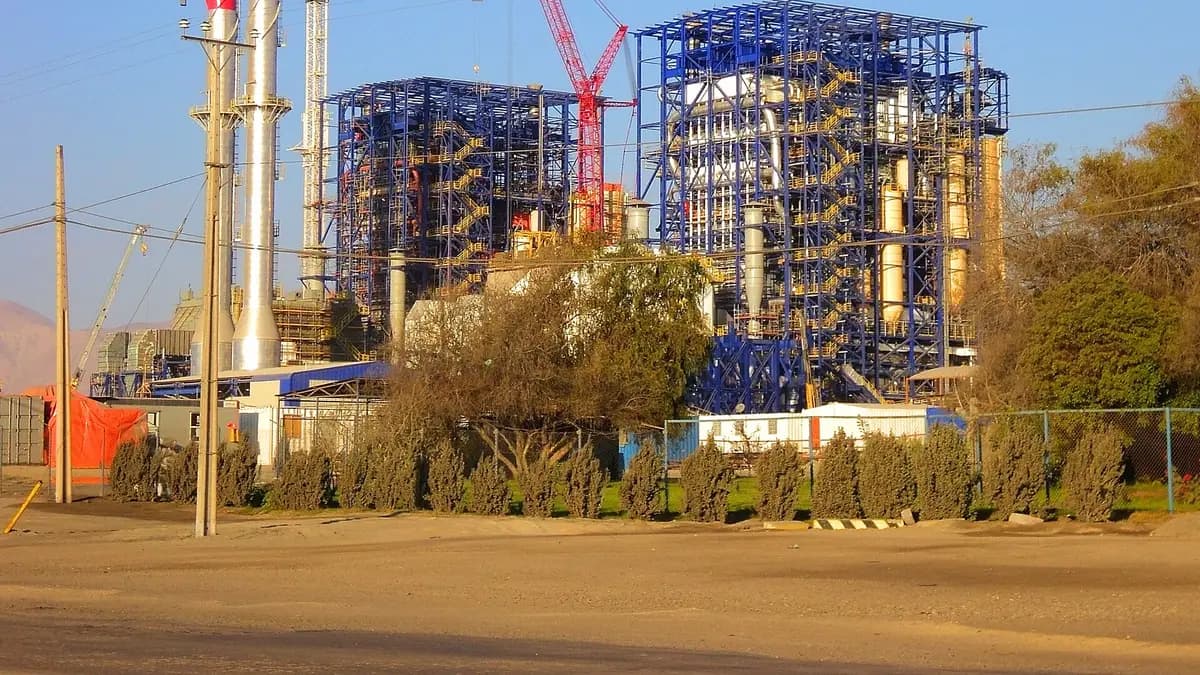
Chile had 28 coal units when the decarbonisation process began in 2018. According to the table in the National Electricity Coordinator's works plan of October 2026, 13 have already been retired (2,029 MW), the Infraestructura Energética Mejillones unit (375 MW) was disconnected to switch to natural gas, and 14 units are still running on coal, with 3,130 MW in total. The Ministry of Energy, in its October 2025 plan, counted 11 retired units totalling 1,679 MW, 30% of the original capacity.
| Ventanas 1 | Valparaíso | 120 | 1964 | 2021 | Retired |
| Bocamina | Biobío | 130 | 1970 | 2021 | Retired |
| Tocopilla U12 | Antofagasta | 87 | 1983 | 2019 | Retired |
| Tocopilla U13 | Antofagasta | 86 | 1985 | 2019 | Retired |
| Tocopilla U14 | Antofagasta | 136 | 1987 | 2022 | Retired |
| Tocopilla U15 | Antofagasta | 132 | 1987 | 2022 | Retired |
| Central Tarapacá | Tarapacá | 158 | 1999 | 2020 | Retired |
| Bocamina II | Biobío | 350 | 2012 | 2023 | Retired |
| Ventanas 2 | Valparaíso | 220 | 1977 | 2023 | Retired |
| Norgener 1 | Antofagasta | 140 | 1995 | 2024 | Retired |
| Norgener 2 | Antofagasta | 136 | 1997 | 2024 | Retired |
| Mejillones 1 | Antofagasta | 160 | 1995 | 2025 | Retired |
| Mejillones 2 | Antofagasta | 174 | 1998 | 2025 | Retired |
| Infraestructura Energética Mejillones (IEM) | Antofagasta | 375 | 2018 | 2025 | Conversion to gas |
| Andina | Antofagasta | 177 | 2011 | 2027 | Committed retirement |
| Hornitos | Antofagasta | 178 | 2011 | 2027 | Committed retirement |
| Angamos 1 | Antofagasta | 277 | 2011 | 2030 | Scheduled retirement |
| Angamos 2 | Antofagasta | 281 | 2011 | 2030 | Scheduled retirement |
| Nueva Ventanas | Valparaíso | 267 | 2010 | 2030 | Scheduled retirement |
| Campiche | Valparaíso | 270 | 2013 | 2030 | Scheduled retirement |
| Guacolda 1 | Atacama | 152 | 1995 | 2030 | Retirement or conversion (ammonia) |
| Guacolda 2 | Atacama | 152 | 1996 | 2030 | Retirement or conversion (ammonia) |
| Guacolda 3 | Atacama | 152 | 2009 | 2033 | Retirement or conversion (ammonia) |
| Guacolda 4 | Atacama | 152 | 2010 | 2033 | Retirement or conversion (ammonia) |
| Guacolda 5 | Atacama | 152 | 2015 | 2033 | Retirement or conversion (ammonia) |
| Santa María | Biobío | 370 | 2012 | 2040 | 2040 target, no committed date |
| Cochrane 1 | Antofagasta | 275 | 2016 | 2040 | 2040 target, no committed date |
| Cochrane 2 | Antofagasta | 275 | 2016 | 2040 | 2040 target, no committed date |
Coal capacity figures differ between sources (3,130 MW in the Coordinator's table versus 3,867 MW in the CNE figure) because of different gross or net capacity criteria, plants being converted and cut-off dates. Each country's coal generation can be compared in our ranking of the countries that generate the most electricity from coal.
Which thermal plants will close and when
The Coordinator's schedule uses the dates committed by the companies and, for plants without a date, assumes retirement in 2040, the decarbonisation plan target. The year with the most scheduled exits is 2030, with 1,399 MW: the two Angamos units in Mejillones, Nueva Ventanas and Campiche in Puchuncaví and the first two Guacolda units.
| Year | Units | MW | Detail |
|---|---|---|---|
| 2027 | Andina and Hornitos (Mejillones) | 355 | The CNE postponed their retirement to May 2026; Engie plans to convert them to LNG by end-2028 |
| 2030 | Angamos 1 and 2, Nueva Ventanas, Campiche, Guacolda 1 and 2 | 1,399 | Quintero Energía decided to postpone closing Nueva Ventanas and Campiche |
| 2033 | Guacolda 3, 4 and 5 | 456 | Possible conversion with a 50% ammonia blend |
| 2040 | Santa María (Coronel), Cochrane 1 and 2 (Mejillones) | 920 | No committed date: the 2040 target applies |
Source: National Electricity Coordinator, SEN works plan 2026-2050, table 3.2 and notes (October 2026). Sums by year calculated by Energía Futura.
Not all will leave the system: several will be converted. The first was Engie's IEM, which swapped coal for natural gas, as we reported in Chile's first coal plant conversion. For Guacolda, the Coordinator considers a possible 30% ammonia blend in units 1 and 2 by 2030 and 50% in all five units by 2033. Angamos has a conversion to a molten-salt storage system under assessment, according to the Ministry's plan.
- 2019First retirementsTocopilla U12 and U13 (173 MW).
- 2023Bocamina II leaves350 MW in Coronel, along with Ventanas 2 (220 MW).
- 202511 units out: 1,679 MW30% of the original coal capacity. IEM disconnects to switch to gas.
- 2027Andina and Hornitos355 MW in Mejillones; Engie plans to switch them to LNG by end-2028.
- 2030Angamos, Nueva Ventanas and Campiche1,095 MW scheduled to retire, plus Guacolda 1 and 2.
- 2040Target: zero coalSanta María and Cochrane, with no committed date, are assumed out.
Does your company work in generation, plant conversion, storage or transmission? Reach Energía Futura's readers.
See advertising optionsHow much electricity thermal plants generate in Chile
In 2025, fossil plants generated 29.8 TWh, 33.6% of Chile's electricity, according to Ember: 15.7 TWh from coal (17.8%), 13.5 TWh from natural gas (15.3%) and 0.5 TWh from oil and other fossil fuels. That is more than in 2024, when fossil generation fell to 26.6 TWh thanks to a rainy year, but far from the 46.8 TWh peak of 2013.
View the data as a table
| Coal | Natural gas | Oil and other fossil | |
|---|---|---|---|
| 2000 | 8 | 11 | 2 |
| 2001 | 5 | 13 | 1 |
| 2002 | 5 | 13 | 1 |
| 2003 | 5 | 17 | 2 |
| 2004 | 8 | 17 | 3 |
| 2005 | 7 | 14 | 3 |
| 2006 | 11 | 11 | 3 |
| 2007 | 13 | 5 | 15 |
| 2008 | 14 | 2 | 16 |
| 2009 | 15 | 4 | 12 |
| 2010 | 17 | 11 | 8 |
| 2011 | 20 | 14 | 6 |
| 2012 | 25 | 13 | 6 |
| 2013 | 30 | 11 | 5 |
| 2014 | 26 | 10 | 4 |
| 2015 | 28 | 11 | 3 |
| 2016 | 30 | 12 | 3 |
| 2017 | 29 | 13 | 2 |
| 2018 | 30 | 13 | 1 |
| 2019 | 28 | 16 | 1 |
| 2020 | 26 | 15 | 2 |
| 2021 | 26 | 16 | 3 |
| 2022 | 22 | 16 | 3 |
| 2023 | 15 | 17 | 2 |
| 2024 | 14 | 13 | 0 |
| 2025 | 16 | 14 | 1 |
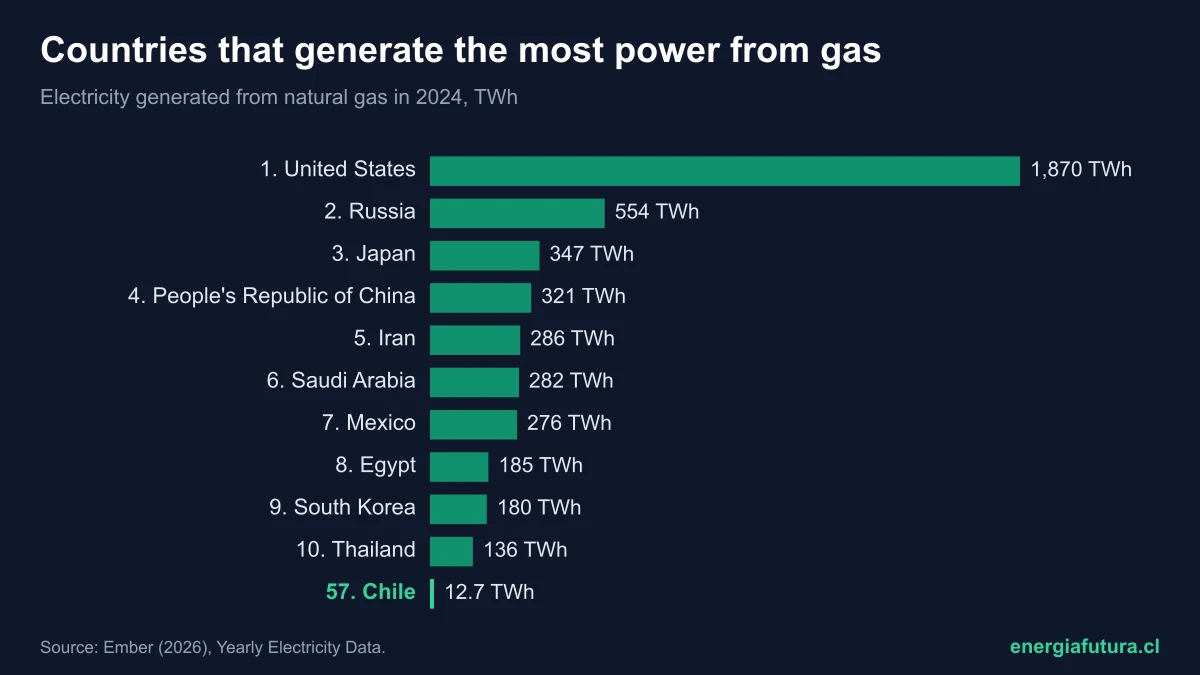
The series tells the story of Chile's system. Coal grew to above 30 TWh in 2013 and in 2016, and since 2021 has fallen sharply. Oil jumped in 2007 and 2008, when the cut in Argentine gas forced generation with diesel. Natural gas recovered with LNG and ranged between 10 and 17 TWh a year. How much Chile generates from gas compared with other countries can be seen in our ranking of the countries that generate the most electricity from natural gas.
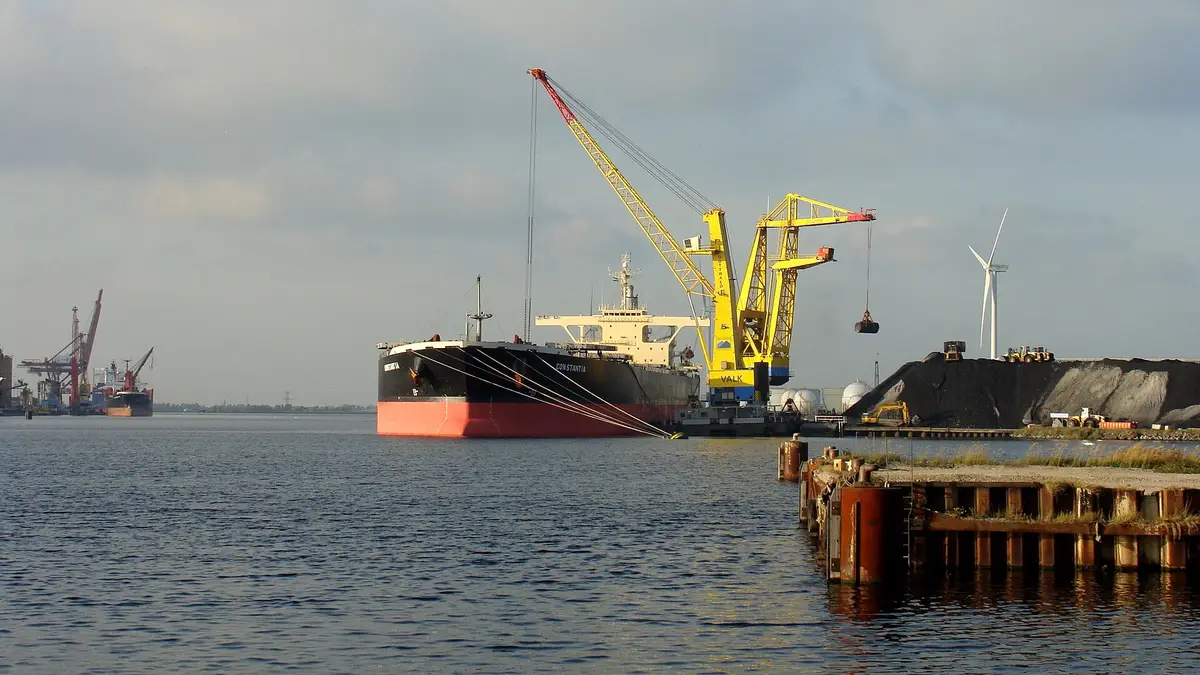
Day to day, thermal plants generate mostly at night and in the hours when solar falls short. In October 2026 renewable generation passed 90% of the month for the first time, leaving thermal plants in a backup role, as we reported in the renewable generation record. Their capacity is still needed for system security while batteries and transmission grow.
Frequently asked questions
How many thermal power plants are there in Chile?
In capacity, 11,204 MW of thermal plants in the SEN as of July 2026 (CNE), 28.6% of the total. Among them, 14 coal units are still running, according to the Coordinator, alongside the natural gas and diesel plants.
How many coal plants have closed in Chile?
13 units are listed as retired in the Coordinator's October 2026 table (2,029 MW), and one more (IEM, 375 MW) was converted to natural gas.
When will Chile stop using coal for electricity?
The decarbonisation plan target is to retire or convert all coal plants by 2040 at the latest. The Coordinator schedules exits in 2027, 2030, 2033 and 2040.
Which region has the most thermal plants?
Antofagasta has the most thermal capacity in MW because of its size, but Valparaíso is where they weigh most: 75% of its capacity is thermal.
How much electricity do thermal plants generate in Chile?
29.8 TWh in 2025, 33.6% of the total, according to Ember: 15.7 TWh from coal, 13.5 TWh from natural gas and 0.5 TWh from oil.