Mining electromobility in Chile has a new research program. On Friday, October 23, 2026, the University of Chile launched the project "Electromobility in Mining: Rethinking Mine Design and Operation for Sustainability", which will run for three years and study how to design and operate mines built from the start for electric equipment, according to the university's Faculty of Physical and Mathematical Sciences (FCFM).
The project is funded by M.C. Inversiones Limitada (MCI), a subsidiary of Japan's Mitsubishi Corporation, and will be carried out by two university centers: the Sustainable Electromobility Acceleration Center (CASE) and the Advanced Mining Technology Center (AMTC). Codelco and Antofagasta Minerals take part as industrial partners and will contribute operational experience. The university did not disclose the amount of funding.
What the mining electromobility project will study
The initiative will work on four interconnected areas and will consider both underground and open-pit mines of different sizes. Its stated goal is to deliver decision-support tools and replicable methods for real mine planning, as well as scientific publications.
| Work area | What it covers |
|---|---|
| Mine design | How a mine's layout changes if its equipment is electric |
| Electrical infrastructure | Grids, chargers and power supply capacity inside the site |
| Fleet electrification | Trucks, front loaders and other battery or grid-connected equipment |
| Energy management | When and how to charge, and how to coordinate fleet demand with the power system |
Source: Faculty of Physical and Mathematical Sciences, University of Chile, October 23, 2026. Descriptions of each area are an Energía Futura summary.
"Electrifying mining goes far beyond replacing diesel equipment with electric equipment," said Marcos Orchard, director of CASE, at the launch. The underlying idea is that an electric truck does not perform the same if it is placed in a mine designed for diesel trucks: ramps, distances, charging points and the internal grid must be planned differently.
Who is involved
The launch was attended by MCI CEO Koji Uchino; FCFM dean Susana Mondschein; Undersecretary of Mining Álvaro González and Undersecretary of Energy Hugo Briones, along with executives from the National Mining Society (Sonami) and the Mining Council. Uchino said the alliance reflects MCI's commitment to remain "a reliable partner for the sustainable development of the sector." MCI manages mineral resource businesses in Latin America and invests in copper and iron ore operations, according to the university.
Why mining electromobility matters for Chile
Copper mining is one of the country's largest energy users, and a growing share of that energy is diesel. According to the annual energy consumption report of the Chilean Copper Commission (Cochilco), updated to 2025 and released in September 2026, the sector used 210.6 petajoules (PJ) in 2025, 27.3% more than in 2015, while fine copper output fell from 5.77 to 5.39 million tonnes. For the first time in the series, fuels slightly exceeded electricity, and diesel accounts for 93% of thermal sources.
| Indicator | 2015 | 2025 |
|---|---|---|
| Total energy use of copper mining | 165.4 PJ (estimate) | 210.6 PJ |
| Fine copper production | 5.77 million t | 5.39 million t |
| Energy per tonne of fine copper | — | 39.1 GJ (+36% in the decade) |
| Seawater (pumping and desalination) | — | 12.4 PJ (×5.6 in ten years) |
| Diesel share of fuels | — | 93% |
| Electricity certified as renewable | 45.1% (2022) | 80.1% |
Source: Cochilco, copper mining energy consumption report updated to 2025, with data from the Mining Survey of Production, Water and Energy (EMPAE), cited by Reporte Minero (October 8, 2026). The 2015 value was calculated from the reported 27.3% increase.
The table shows the paradox: each tonne of copper takes more energy because ore grades are falling and mines are deeper, so trucks must travel farther with more load. While the electricity miners buy is increasingly clean, thanks to contracts with renewable generators, the diesel in the trucks remains fossil. We reviewed those contracts in certified renewable energy, where mining accounts for 83%.
Diesel's weight in emissions
Diesel equipment accounts for 40% to 50% of a mine site's direct emissions, and mining produces about 15% of Chile's greenhouse gas emissions, according to AMTC figures cited by Reporte Minero in July 2026. That is why the large companies have fleet targets: according to Cochilco's update with 2024 data, 76% of operations had electromobility or low-emission transport plans, and at Codelco the figure reached 100%.
The background: Batmine, ELMOMine and Antucoya
The new project joins others the University of Chile runs with industry. In June 2026, AMTC and Codelco launched Batmine, funded by the French Government and Codelco, with the French institute CEA-Liten and CASE, to study how the batteries of front loaders and low-profile trucks degrade in underground mining, using power profiles from real Codelco and Sandvik data. Another project, "Electromobility in Massive Underground Mining", develops the ELMOMine tool, which simulates electric fleets before they are deployed.
| Initiative | Year | Participants | Focus |
|---|---|---|---|
| Battery truck study at Antucoya | 2021 | Antofagasta Minerals, CASE, Energy Sustainability Agency, Centro Mario Molina and VTT (Finland) | Conceptual design of a battery truck fleet and its chargers |
| Batmine | 2026 | AMTC, Codelco, CASE and CEA-Liten (France) | Battery degradation in underground mining |
| ELMOMine | Ongoing | AMTC | Simulator for underground electric fleets |
| Electromobility in Mining | 2026-2029 | CASE, AMTC, MCI, Codelco and Antofagasta Minerals | Mine design, power grid, fleets and energy management |
Sources: Antofagasta Minerals (November 2021, via Reporte Minero), Reporte Minero (July 8, 2026) and the University of Chile's FCFM (October 23, 2026). The Antucoya study estimated a potential reduction of 55,767 tonnes of CO2 if the mine's entire truck fleet were electrified.
Electrifying mine sites will also push up electricity demand. The Coordinador Eléctrico's projections for the next two decades place mining among the main drivers of consumption, along with green hydrogen and data centers, as we explained in Chile's electricity demand toward 2046.
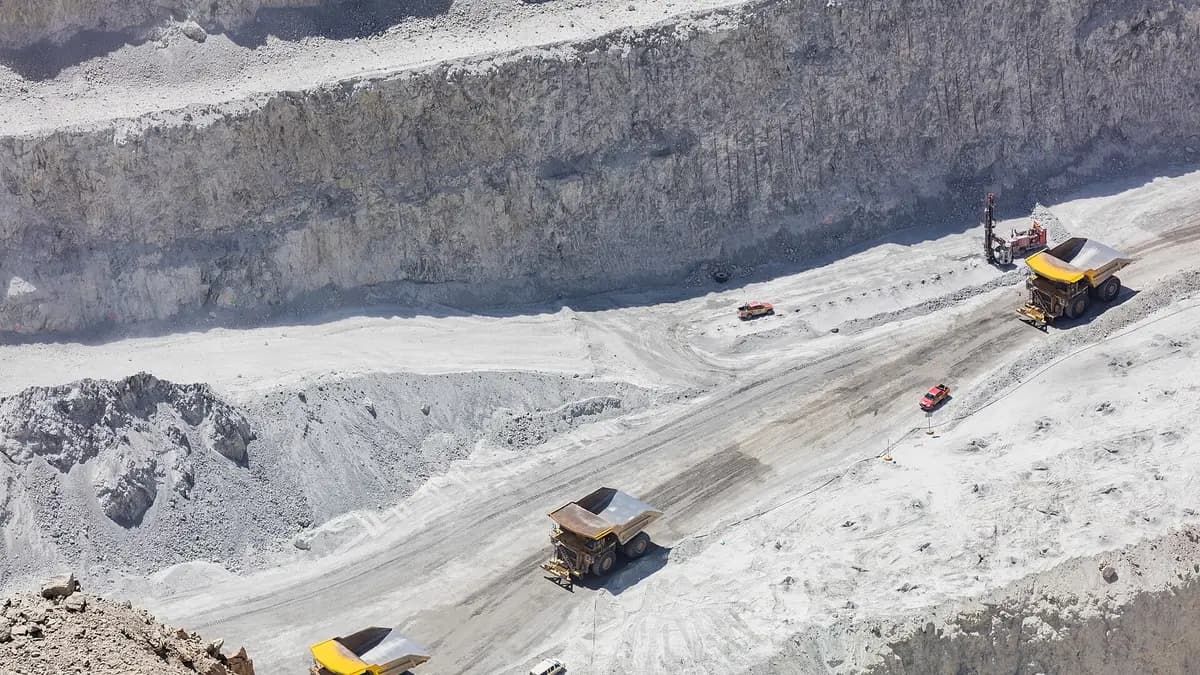
The challenge is especially large in the biggest open-pit mines. At operations such as Escondida or Chuquicamata, fleets of giant haul trucks climb ramps several kilometers long every day; the largest deposits on the planet are in the ranking of the world's biggest copper mines. For them, the options under study include battery trucks, trolley systems that power the truck from an overhead line on climbs, and combinations of both.
Does your company offer electromobility, charging or energy solutions for mining? Reach Energía Futura's readers.
See advertising optionsFrequently asked questions
Who funds the University of Chile's mining electromobility project?
M.C. Inversiones Limitada (MCI), a subsidiary of Mitsubishi Corporation, through an agreement with the Faculty of Physical and Mathematical Sciences. The amount was not disclosed.
How long will it last?
Three years from its launch on October 23, 2026.
What do CASE and AMTC do?
CASE is the University of Chile's Sustainable Electromobility Acceleration Center. AMTC, created in 2009 and with core funding from the National Research and Development Agency (ANID), researches advanced mining technology.
How much diesel does copper mining use?
According to Cochilco, in 2025 fuels were slightly more than half of the 210.6 PJ consumed by copper mining, and diesel represented 93% of those thermal sources.