A thermoelectric electric cooler draws between 45 and 60 W continuously, according to the listings of models sold in Chile, and cools to about 18 °C below ambient temperature, according to Black+Decker. Plugged in for 24 hours it uses 1.2 kWh, about CLP 306 at the BT1 tariff of CGE of CLP 255.27/kWh. A compressor model averages about 12 W and can freeze.
With summer, electric coolers are back in searches: they work in the car, at the beach, camping or as a back-up fridge. But not all work the same way. This guide explains the two technologies, how much they use, what they cost in Chile and how long a car battery lasts, with data from listings on Falabella checked on 11 November 2026 and from manufacturers.
View the data as a table
| Thermoelectric draw | 50 W |
| Compressor average (Dometic CFX3 35) | 11.8 W |
| Thermoelectric plugged in for 24 hours | $306 |
| How much a thermoelectric cools | 18 °C below ambient |
How a thermoelectric electric cooler works
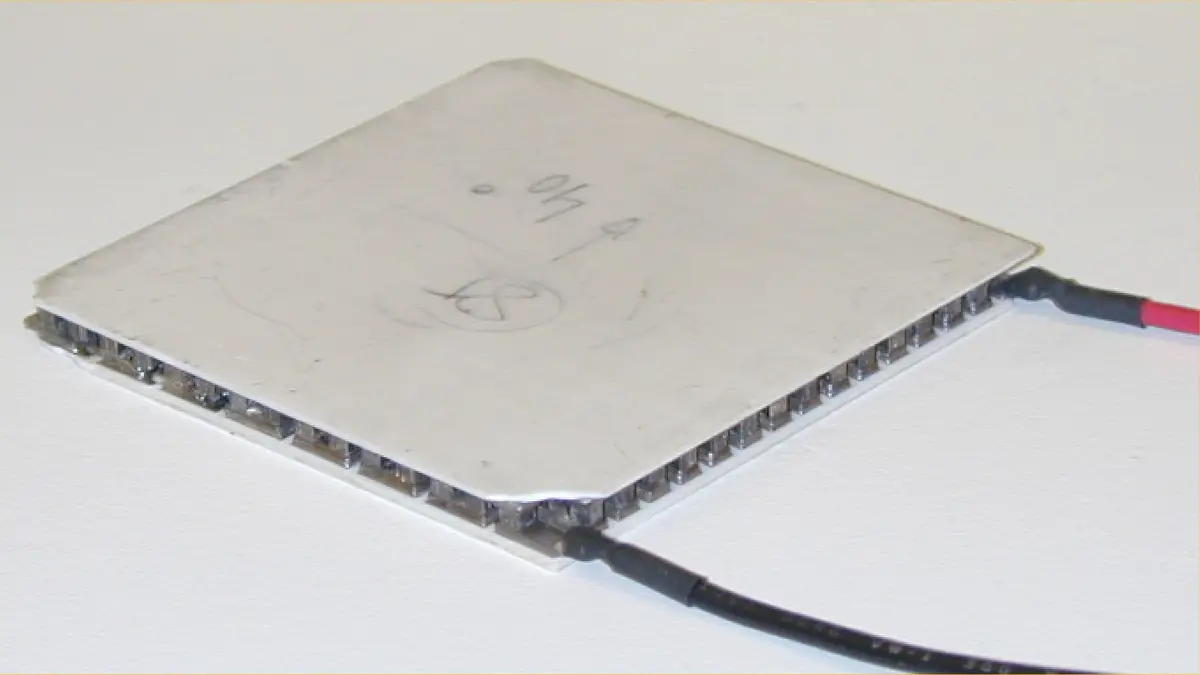
Most cheap electric coolers use a Peltier cell: a semiconductor plate that, when current flows, cools one side and heats the other. A fan carries the heat out. It has no compressor or refrigerant, which makes it light, quiet and cheap. Reversing the current makes the same unit heat, and many models include that mode.
Its limit is physics. A Peltier cell does not hold a set temperature: it cools a number of degrees relative to the surrounding air. Black+Decker states 18 °C ± 3 °C below ambient for its 24-litre model; Kano says 14 to 16 °C for its 33-litre Queulat and Terra Force up to 25 °C. With 32 °C inside a car in the sun, the interior will be around 14 °C: good for keeping drinks cold, not for cooling fast or freezing. It is the same technology as cheap wine coolers, as we explain in our guide to electric wine coolers.
How much power an electric cooler uses
A thermoelectric cooler runs all the time at its rated power, because the cell does not switch off when it reaches temperature (some models with a thermostat do cut out). So its consumption is simple to calculate: power times hours. A compressor, by contrast, switches on and off like a fridge, and its real consumption is much lower than its rated power.
| Model | Technology | Cooling power (220 V) | Cooling power (12 V) | Capacity |
|---|---|---|---|---|
| Black+Decker BDC24L | Thermoelectric | 60 W | 50 W | 24 litres |
| Thorben Electro Cooler Dual | Thermoelectric | 60 W | 45 W | 29 litres |
| Terra Force 36 L | Thermoelectric | 50 W | Not stated | 36 litres |
| Terra Force freezer | Compressor | 45 W (rated) | 45 W (rated) | 20, 30 and 60 litres |
| Dometic CFX3 35 | Compressor | 50 W (max input) | 0.98 Ah/h average (~11.8 W) | 36 litres |
Sources: seller listings on Falabella (11 November 2026) and Dometic specifications, measured at 32 °C ambient and 4 °C inside. The Dometic's average in watts is an Energía Futura calculation (0.98 A × 12 V).
The difference is large: at 32 °C ambient and 4 °C inside, the Dometic averages about 11.8 W, four times less than a 50 W thermoelectric, and it also reaches a fridge temperature the thermoelectric cannot. It is the same logic that separates a compressor mini fridge from a thermoelectric one.
How much an electric cooler costs to run in Chilean pesos
Plugged into the home grid, at CLP 255.27 per kWh, a 50 W thermoelectric costs CLP 13 an hour, CLP 306 a day and CLP 613 over a 48-hour weekend. A 60 W unit adds up to CLP 735 in 48 hours. A compressor averaging 11.8 W costs about CLP 145 over the same weekend. Used all month as a back-up fridge, the 50 W thermoelectric reaches 36 kWh, about CLP 9,190.
| Use | Thermoelectric 50 W | Thermoelectric 60 W | Compressor (~11.8 W avg.) |
|---|---|---|---|
| 1 hour | CLP 13 | CLP 15 | CLP 3 |
| One day (24 h) | CLP 306 | CLP 368 | CLP 72 |
| Weekend (48 h) | CLP 613 | CLP 735 | CLP 145 |
| One month (30 days) | CLP 9,190 | CLP 11,028 | CLP 2,169 |
Source: Energía Futura calculation with listed powers, Dometic's stated average consumption and CGE's October 2026 BT1 tariff. In a car, energy comes from the alternator while the engine runs, or from the battery when it is stopped.
How long a car battery lasts with an electric cooler
A 45 to 50 W thermoelectric at 12 V draws about 4 amps. A 60 Ah lead-acid car battery should only be discharged by half, because, as Dometic notes, lead-acid batteries have 50% usable capacity. That leaves about 30 Ah: around 7 to 8 hours with the engine off before risking that the car won't start. That is why manufacturers recommend disconnecting it when the engine stops.
A compressor changes the maths. At 0.98 Ah per hour, a 40 Ah lithium battery powers a Dometic CFX3 35 for about 40 hours, according to the manufacturer's own method, and many of these units have a low-voltage cut-off that protects the car battery. For off-grid camping, a 100 W portable solar panel can replace on a sunny day what a compressor uses.

Electric cooler prices in Chile
On Falabella, thermoelectric models start at CLP 69,990 (19-litre Klimber) and reach about CLP 130,000 for 33 to 36-litre models. Compressor models, which cool and freeze between −20 °C and 20 °C, start at CLP 194,990 (35-litre Homen) and exceed CLP 400,000 for 60-litre dual-zone models.
| Klimber 19 L | 19 | Peltier | 69,990 |
| Lernen 24 L | 24 | Peltier | 74,990 |
| Thorben Dual 29 L | 29 | Peltier | 79,990 |
| XRoad 30 L | 30 | Peltier | 89,990 |
| Klimber 40 L | 40 | Peltier | 99,990 |
| Black+Decker BDC24L | 24 | Peltier | 119,990 |
| Terra Force 36 L | 36 | Peltier | 129,990 |
| Kano Queulat 33 L | 33 | Peltier | 129,990 |
| Homen EA35C 35 L | 35 | Compressor | 194,990 |
| XRoad freezer 40 L | 40 | Compressor | 219,990 |
| Terra Force freezer 20 L | 20 | Compressor | 249,990 |
| Terra Force freezer 30 L | 30 | Compressor | 279,990 |
| Terra Force freezer 60 L | 60 | Compressor | 429,990 |
Source: offer prices published on Falabella on 11 November 2026; they may vary with promotions and seller. Listed regular prices are 20% to 40% higher.
How to use an electric cooler so it uses less
- Load it full and cold: drinks and food that are already chilled help hold the temperature and the unit works less.
- Keep it in the shade: a thermoelectric cools relative to the surrounding air; inside a car in the sun, the interior stays warmer.
- Don't block the fan grille: that is where the heat leaves. If it is blocked, the cooler stops cooling.
- Open it as little as possible: each opening lets warm air in.
- At home, use the manufacturer's 220 V adapter: some models draw more at 220 V than at 12 V due to adapter losses, as the Black+Decker and Thorben listings show.
An electric cooler can also serve as a back-up during a power cut, to keep medicines or food that need cold. In that case, a compressor model connected to a portable battery or the car battery lasts many more hours than a thermoelectric, because of its lower average consumption.
Which electric cooler to choose
- For short car trips and the beach: a 20 to 30-litre thermoelectric is enough, as long as you put drinks in already cold. It is the cheapest.
- For multi-day camping or a home without a fridge: a compressor. It holds 4 °C in strong heat, freezes and uses four times less.
- If you will run it on a battery: compressor, with low-voltage cut-off. A thermoelectric drains a car battery in one night.
- If you also want to warm food: many thermoelectrics have a heating mode, from 50 to 65 °C.
A practical point: a thermoelectric is not designed to cool from room temperature. Kano says drinks at room temperature take 2 to 3 hours to cool in its model. It is better to chill them first in the home fridge and use the cooler to keep them cold.
And if the goal is only to have back-up for your phone and lights while camping, a portable battery may be more useful than a large cooler, as we explain in our power bank guide.
Do you sell camping, refrigeration or portable power equipment? Reach Energía Futura's readers.
See advertising formatsFrequently asked questions
How much power does an electric cooler use?
A thermoelectric, between 45 and 60 W continuously. A compressor model has a similar rated power but averages about 12 W because it switches off when it reaches temperature.
How much does an electric cooler cost per day in Chile?
A 50 W thermoelectric, about CLP 306 over 24 hours at CLP 255.27/kWh. A compressor, about CLP 72.
Does an electric cooler freeze?
Only compressor models, which reach −20 °C. Thermoelectrics cool about 14 to 25 °C below ambient.
Can I leave the cooler connected to the car all night?
Not advisable with a thermoelectric: in about 7 to 8 hours it can drain the usable half of a 60 Ah battery. Compressor models usually have a low-voltage cut-off.
How much does an electric cooler cost in Chile?
From CLP 69,990 for thermoelectrics and from CLP 194,990 for compressor models, according to Falabella on 11 November 2026.